


Which solar proposal software works for the UAE? There is no single answer, because each emirate sets its own rooftop rules. Dubai carries your extra solar power forward as a bill credit. Abu Dhabi does not allow net metering unless its Department of Energy explicitly authorizes it. The northern emirates run a separate scheme. So pick a tool that lets you enter your own tariff and export rules.
On the pages we read, OpenSolar and SolarVis both describe a credit carry-over setting. SolarVis is the only tool here that names Arabic as an interface language. Energy Toolbase suits solar plus storage work, but it publishes no ETB Developer price. SurgePV describes roof modeling through proposals in one product, and you should ask in a demo how it handles UAE tariffs. No vendor page we read describes UAE tariffs or rules.
This is a desk comparison of what each vendor publishes, checked October 2026. We have not run side-by-side tests. Local rules come from the Dubai, Abu Dhabi and northern emirates authorities listed below. Tool facts come from each vendor’s own site. For the wider Dubai process, see our DEWA Shams Dubai guide.
Criteria used: tariff and credit entry, Arabic interface, currency setting, VAT line, price in dirhams, free tier or trial.
Want to see SurgePV on your own UAE project?
Book a guided demo and bring a real site. We walk through design, yield, finance and the proposal in one platform.
Book a Free DemoChecking cost first? See the SurgePV pricing page.
Best-For Picks for the UAE
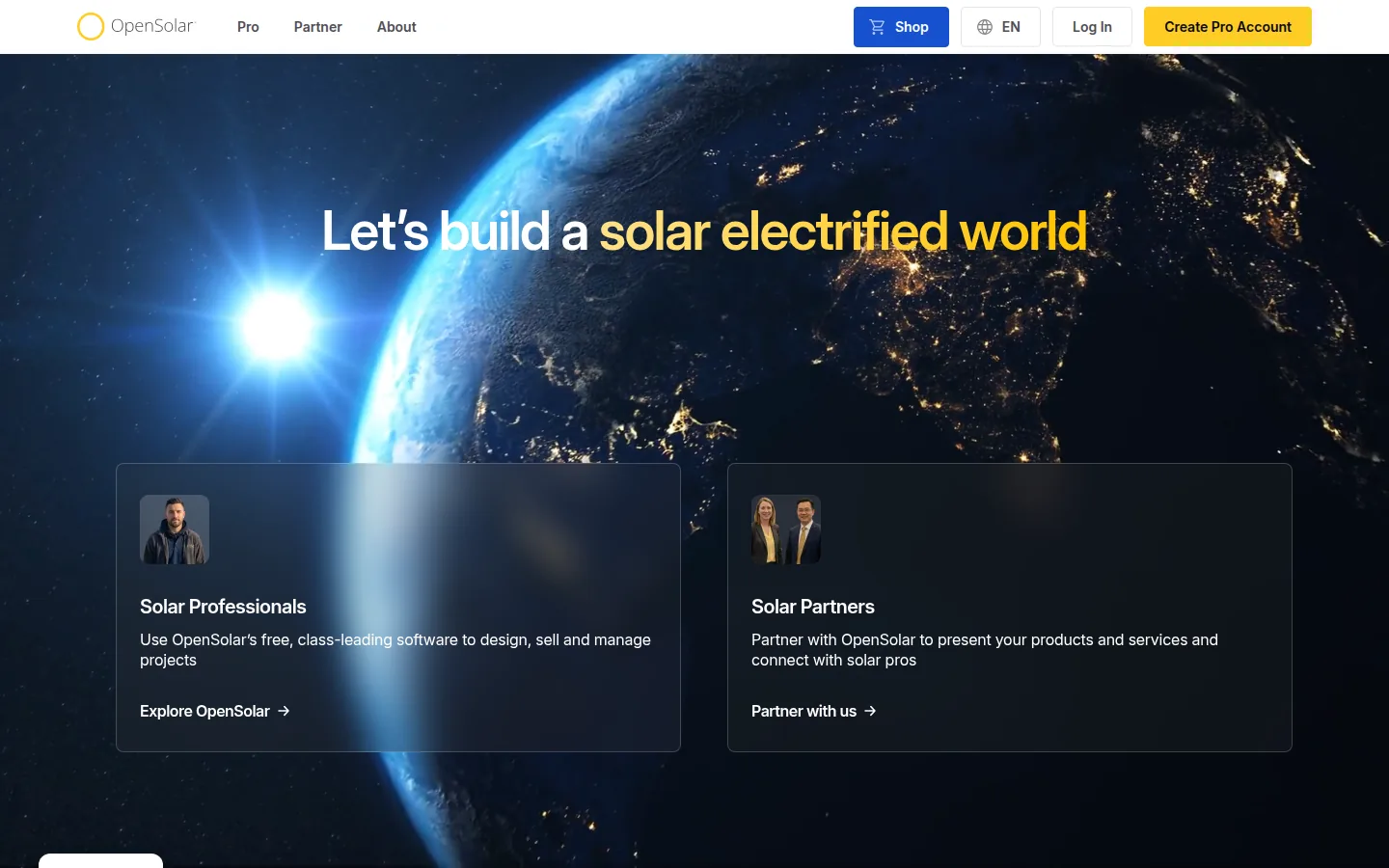
- Dubai-style credit carry-forward in a free core app: OpenSolar. Its tariff article lists “Net Billing with Credit Carryover” and has a Country field. The core app is free. The vendor charges for API Access and connectors from 16 April 2026.
- Arabic interface and a tariff you build yourself: SolarVis. Its FAQ lists Arabic among 24 interface languages. Its tariff page says the configurator handles net metering, credit carry-over, currency and VAT. It names ten pre-built markets and says there are more. The UAE is not one it names, so ask whether it is pre-built or set up the tariff yourself. Prices are in euros.
- Solar plus storage proposals for commercial clients: Energy Toolbase. Its ETB Developer page describes solar and storage modeling for front-of-meter and behind-the-meter projects. It publishes no ETB Developer price. Its page names NEM, VNEM and NEMA billing programs and describes no UAE program, so ask how its team would set up DEWA rates.
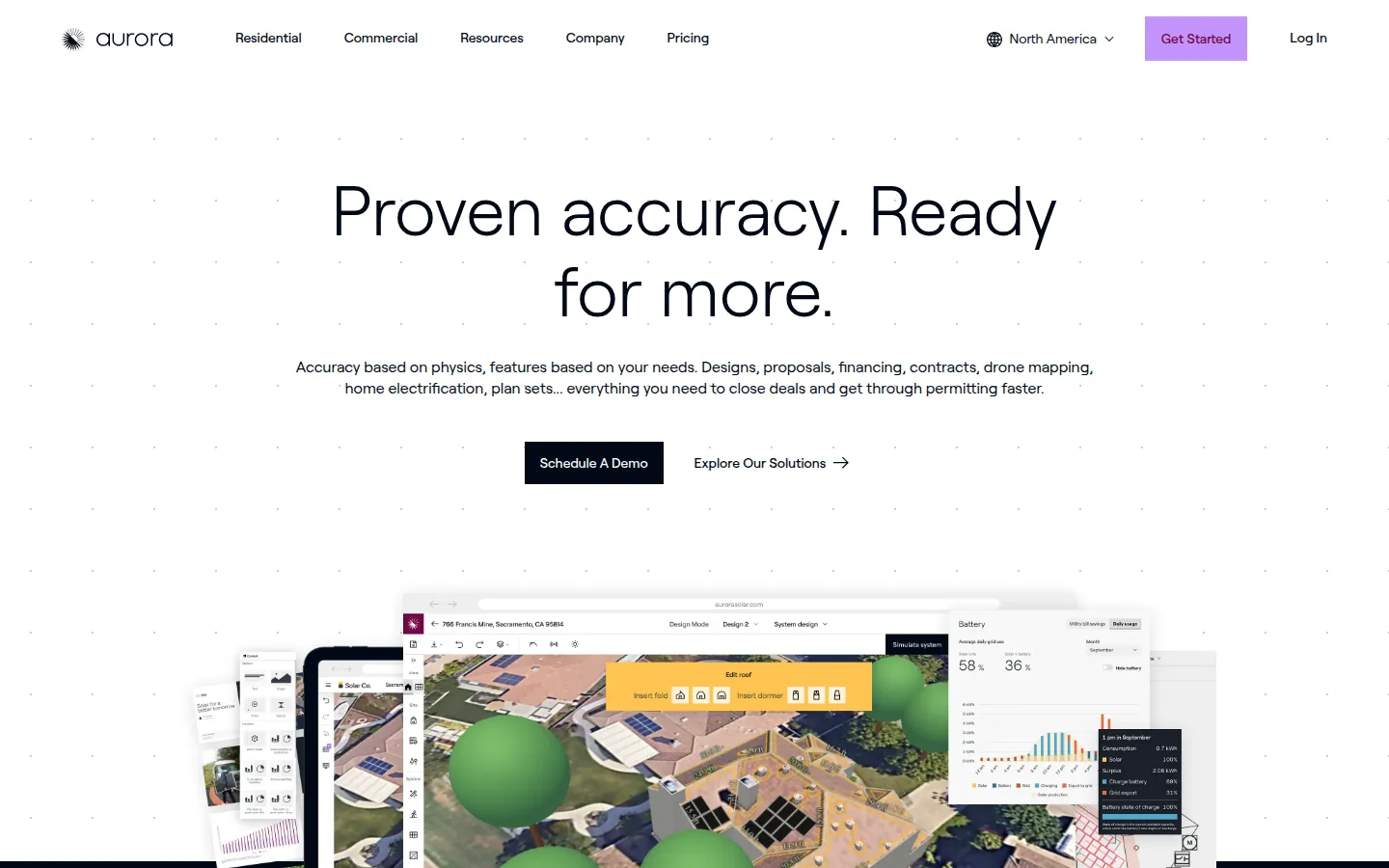
- Teams already on Aurora: Aurora Solar. It offers web and PDF proposals and lets you edit utility rates. Its help article says you set the currency for projects and proposals. You would enter DEWA rates as a custom rate.
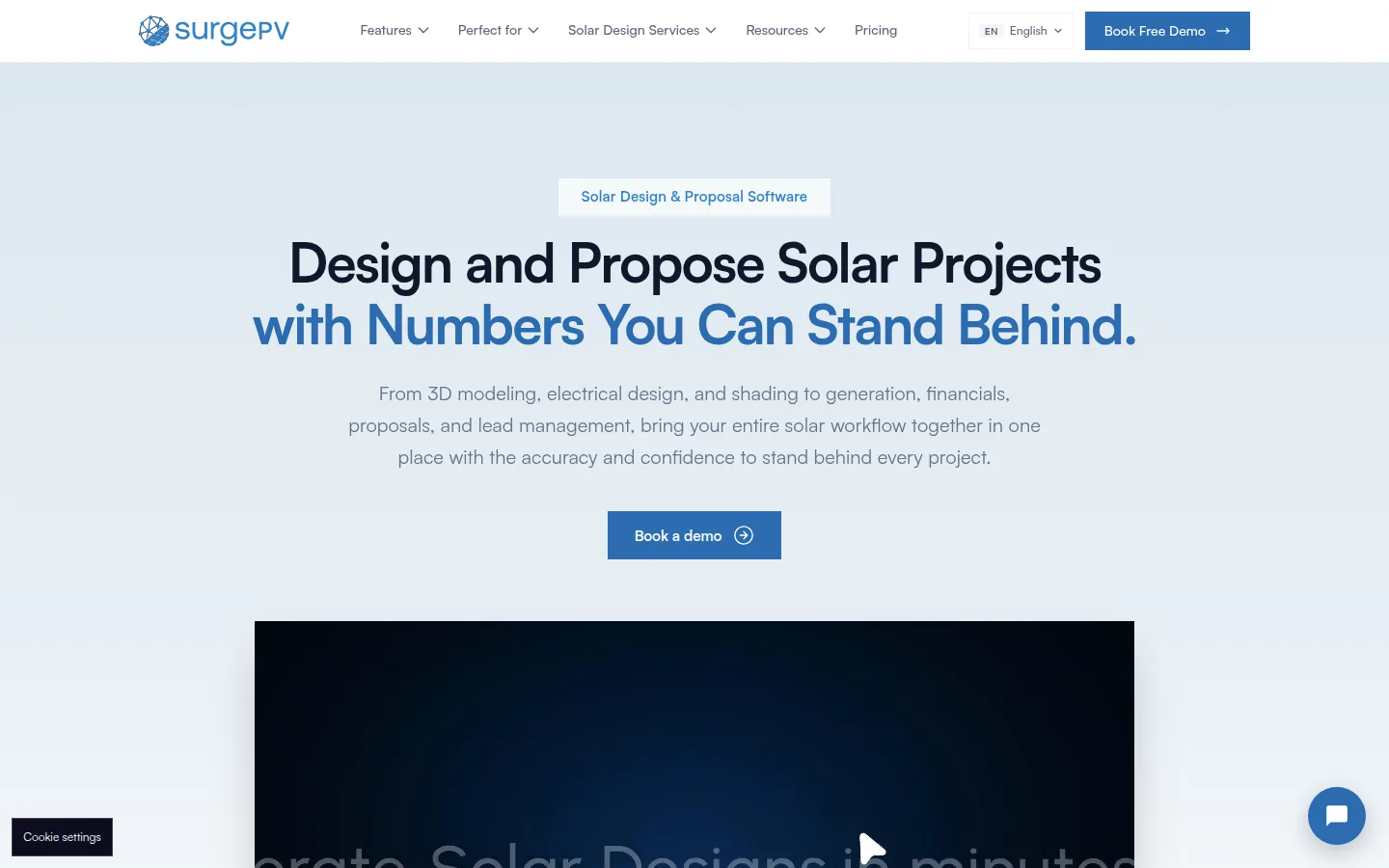
- Roof model to bill of materials and proposal in one product, priced per user: SurgePV. It lists roof modeling, shading, yield, financial modeling, bill of materials (BOM, the parts list) and proposals. Ask in a demo how it handles DEWA credits and AED quotes. Its published scope does not state them.
Comparison Table
Listed alphabetically. This is not a ranking; pick by the situation above. Prices checked October 2026 on each vendor’s own page. No vendor publishes a price in dirhams (AED).
| Tool | Best for | Price | Free or paid | Decisive scope fact |
|---|---|---|---|---|
| Aurora Solar | Teams already on Aurora | $159 or $259 per user per month billed monthly; $135 or $220 billed annually | Paid | Custom utility rates; no UAE rules described |
| Energy Toolbase | Solar plus storage proposals | Not published; book a demo | Paid | Net metering listed as NEM, VNEM, NEMA; no UAE item |
| OpenSolar | Free quoting with a carry-over tariff | Core app free; API Access and connectors charged from 16 April 2026 | Free core app, paid API and connectors | Net billing with credit carry-over option |
| SolarVis | Arabic interface, custom tariff | From 990 euros per year (Starter) | Paid, 7-day trial | Arabic interface; UAE not named as pre-built |
| SurgePV | Roof model to BOM and proposal, per user | $1,899 per user per year (1 user), in US dollars | Paid, guided demo | Proposal generation in scope; no UAE item stated |
UAE Criteria Matrix
Each cell is Documented, Partial or Not stated. Documented means the vendor’s own page states it. Partial means the page states a related feature but not the full item. Not stated means the pages we read in October 2026 do not say. For currency, Documented means the page says you can set a currency. It does not say AED is on the list. There are no scores or weights.
| Tool | Tariff and credit entry | Arabic interface | Currency setting | VAT line | Price in AED | Free tier or trial |
|---|---|---|---|---|---|---|
| Aurora Solar | Partial (custom rates; export set as net billing or feed-in tariff; no carry-over setting described) | Not stated | Documented | Not stated | Not published (dollars) | Not stated |
| Energy Toolbase | Partial (customer quote says its team set up a custom rate) | Not stated | Not stated | Not stated | Not published for ETB Developer | Partial (refund policy: free trial periods from time to time; pricing page: demo) |
| OpenSolar | Documented (custom tariff; net billing with credit carry-over) | Not stated (13 proposal languages listed, not Arabic) | Partial (currency formatting; same-currency rule) | Partial (tax settings, tax included or excluded) | Not published (core app free) | Documented (core app free) |
| SolarVis | Documented (configurator; credit carry-over) | Documented (interface) | Documented (configurator) | Documented (configurator) | Not published (euros) | Documented (7-day trial) |
| SurgePV | Partial (financial modeling listed; tariff entry not described) | Not stated | Not stated | Not stated | Not published (USD) | Not stated (guided demo) |
Two things stand out. Only OpenSolar and SolarVis describe a credit carry-over setting, which Dubai needs. No vendor publishes a dirham price. A tool that does not state an item may still support it, so ask each vendor to quote one real UAE job.
Tool Entries
Aurora Solar
Best for: teams already on Aurora that want web and PDF proposals and will enter DEWA rates by hand.
Not the right choice if: you need a carry-over credit setting, an Arabic interface or a dirham price. None appears on the pages we read.
What the vendor documents: its pricing page lists tablet-friendly sales proposals, web and PDF proposals, and a utility rate database you can configure with your own rates. Its rates article says you can set how exports are paid, either net billing or a feed-in tariff. Its pricing page also lists a database of more than 25,000 US jurisdictions. Its settings article says currency is set for projects and proposals.
Price (checked October 2026): Basic $159 per user per month billed monthly, or $135 per user per month billed annually ($1,620 billed annually); Premium $259 per user per month, or $220 billed annually ($2,640 billed annually). This is the North America tab. The page shows a dollar sign and does not name the currency. Enterprise is custom.
Limitations: the pages we read do not describe UAE tariffs or rules. A search of its help center for “Arabic” and “VAT” returned no results.
Vendor link: aurorasolar.com.
Energy Toolbase
Best for: teams that sell solar plus storage to commercial clients and want a vendor to help set up local rates.
Not the right choice if: you need a published price or a self-serve start. Its pricing page says to book 30 minutes for a demo and pricing.
What the vendor documents: its ETB Developer page describes unlimited white-label proposals and tracking of when prospects open them. It also describes solar and storage modeling and net metering support for NEM, VNEM and NEMA billing. A customer quote says the vendor’s team set up a custom rate structure. The vendor’s FAQ says it models cash purchase, power purchase agreements (PPAs), loans and leases.
Price (checked October 2026): not published for ETB Developer on the pricing page. You get pricing on a call. Its refund policy says it offers free trial periods from time to time.
Limitations: the pages we read do not describe a UAE rate or an Arabic option.
Vendor link: energytoolbase.com.

OpenSolar
Best for: installers who want a free core app and will enter the DEWA tariff as a custom tariff.
Not the right choice if: you need an Arabic proposal. Its language article lists English, Dutch, Swedish, Spanish, French, Norwegian, Thai, German, Polish, Portuguese, Italian, Danish and Finnish. A help center search for “Dubai” returned no results.
What the vendor documents: its tariff article lets you create a custom tariff. The fields include Country, bill frequency, flat, time-of-use and tiered rates. The compensation options are Net Billing, Net Billing with Credit Carryover, Buy All, Sell All and Net Energy Metering. The article suggests sending the customer’s bill or official tariff document to OpenSolar Support, which can create the tariff for you.
Price (checked October 2026): the core app is free of charge for solar professionals, per the vendor. From 16 April 2026 the vendor charges for API Access and supported connectors. API Access lets other software connect to OpenSolar. This comes from its 16 February 2026 post.
Limitations: the tariff, the currency and the VAT or tax setting are yours to set up and keep current.
Vendor link: opensolar.com.
SolarVis
Best for: teams that want an Arabic interface and are ready to build the UAE tariff in a configurator.
Not the right choice if: you need a ready-made UAE tariff. Its tariff page names the US, UK, Germany, Türkiye, South Africa, Italy, Spain, France, Poland and the Netherlands “and more” as pre-built. It does not name the UAE. It says any other market is set up in the configurator.
What the vendor documents: its proposal software page says the platform is available in 24 languages, including Arabic and Thai. Each user picks an interface language. The tariff page says the configurator covers net metering, credit carry-over, feed-in tariffs, currency and VAT. Its pricing page lists a single line diagram editor from the Grow plan, and P50, P90 and P99 yield from the Scale plan.
Price (checked October 2026): Starter 990 euros per year (1 user included, up to 100 kWp, plus 200 euros per extra user); Grow 2,490 euros (2 users, up to 3 MWp); Scale 4,790 euros (5 users, up to 10 MWp). Prices are in euros, billed annually. Enterprise is custom. A 7-day free trial starts after a short call, with no credit card.
Limitations: the pages we read do not say whether proposals themselves can be written in Arabic.
Vendor link: solarvis.co.

SurgePV
SurgePV is our product.
Best for: teams that want roof modeling, shading, yield, financial modeling, bill of materials and proposals in one product, priced per user. They will confirm the UAE tariff and AED items in a demo.
Not the right choice if: you want a self-serve trial, because SurgePV offers a guided demo. It is also not right if you need an Arabic interface or a dirham price in writing today, because the published scope does not state them. Results depend on source data, assumptions and equipment models. Outputs support design and documentation. They do not replace approval by the responsible engineer, authority, lender or utility. SurgePV’s published product scope does not list a CRM. Monitoring and ERP are outside its published scope.
What the vendor documents: 3D roof modeling, array layout, shading analysis and energy-yield modeling. It also lists financial modeling, electrical workflow support, bill-of-materials output and proposal generation. See solar proposal software for the product page.
Price (checked October 2026): $1,899 per user per year for 1 user, $1,499 per user for 3 seats, $1,299 per user for 5 seats, in US dollars.
Limitations: the published scope does not state a DEWA credit carry-over setting, an Abu Dhabi rule, an Arabic option or a dirham price.
Vendor link: surgepv.com.
UAE Rules That Shape the Choice
The rules differ by emirate. Read the source for the emirate you sell in.
Dubai: surplus power is a credit, never cash. DEWA is the Dubai Electricity and Water Authority. Shams Dubai is DEWA’s initiative for solar systems that connect to its grid. DEWA’s connection conditions (version 4.1, November 2025) say surplus electricity is carried forward “indefinitely”, with no limit on time or quantity. The customer cannot claim any money for it. The credit offsets only the producer’s own accounts on the same plot. It cannot go to another person or another plot. Each solar generator connects under one “hosting account”, the consumption account it feeds.
Dubai: the size cap depends on the site’s connected load. DEWA’s Total Connected Load is the sum of the approved load on the producer’s accounts on the plot. The solar size can be 100% of the first 100 kW of load, 75% of the next 100 kW, 50% of the next 200 kW, 25% of the next 200 kW, and 5% above 600 kW. The total cannot pass 1,000 kW. Example: a site with 300 kW of connected load can fit 100 + 75 + 50 = 225 kW. A proposal tool should warn you when a design passes this cap.
Dubai: who can install and what it costs. The conditions say you must use DEWA-enrolled consultants and contractors, and equipment that meets DEWA’s standards. Systems go on rooftops, facades and other existing structures, and ground-mounted systems are “not envisaged”. DEWA may set an annual connection cap, and approved requests can then wait until the next calendar year. DEWA’s Shams Dubai FAQ says the one-off connection fee is currently AED 1,500, and it can be lower for systems under 10 kWp that skip the generation check meter. DEWA’s pages return an access error to automated readers, so we read archived copies of both documents, dated 21 April 2026 and 14 July 2026.
Abu Dhabi: net metering is not allowed unless the Department explicitly authorizes it. The Abu Dhabi Department of Energy (DoE) issued a self-supply policy effective 5 February 2026. It says nothing in the policy permits net metering unless DoE explicitly authorizes it. It defines export electricity as metered separately and “not subject to netting or offset”. DoE’s licensing guide (effective 1 January 2023) says net energy metering for limited-scale solar “shall continue to be suspended”. DoE says it will issue implementing guidelines. We did not find them on the DoE pages we read.
Northern emirates: a separate scheme from September 2024. Etihad Water and Electricity (EtihadWE) serves the northern emirates. Its Distributed Solar Systems conditions (version 1, September 2024) allow, in the first phase, residential local, industrial and agricultural customers. Some industrial customers on a preferential tariff are excluded. Systems go on rooftops only. The size limit is 10% of the site’s connected load, and never more than 1,000 kW. Example: a site with 150 kW of connected load can fit 15 kW. You need an approved contractor and approval from the authority that licenses buildings in your emirate. A press report of 18 September 2024 says credits can be used within the same year.
Sharjah. We did not find a rooftop solar or net metering rule on the Sharjah Electricity & Water Authority (SEWA) pages we read. Ask SEWA for its current rule before you quote.
VAT, currency and language. The Ministry of Finance VAT page says VAT started on 1 January 2018 at a standard rate of 5%. Quote in AED, and show VAT as its own line. Ask the client whether they need the proposal in Arabic.
How We Ordered These Tools
SurgePV publishes this page and is a vendor on this list. Its entry uses the same vendor-page sources and template as every other tool here.
We did not rank these tools. They are listed alphabetically, and the best-for picks come from the matrix above.
- Tariff and credit entry: Dubai pays no cash, so a proposal must show a bill credit that carries forward. We did not assess whether any tool applies the DEWA slabs correctly.
- Arabic interface: some UAE clients and staff may prefer Arabic. We did not assess translation quality.
- Currency setting: a proposal in dirhams is easier to compare with local bids. We did not check which currencies each tool offers.
- VAT line: the UAE charges 5% VAT, so a quote should show it. We did not assess how each tool treats VAT on equipment.
- Price in AED: a dirham price shows what a UAE buyer will pay. We did not assess discounts or negotiated quotes.
- Free tier or trial: a free plan lets a small team test the workflow. We did not assess the limits of any free plan beyond what its page states.
Not Compared Here
Solargraf is not compared on this page. Its site, solargraf.com, returned HTTP 403 to automated reads, including a headless browser, in October 2026. We also did not compare HelioScope, Arka360, Pylon or Sunbase for UAE proposals. So this list covers fewer tools than the topic suggests.
Sources and Dates
Vendor pages were read in October 2026. They are Aurora (pricing and help center), Energy Toolbase (pricing and ETB Developer), OpenSolar (free, its tariff and language articles), SolarVis (pricing, proposal software and tariff pages) and SurgePV (pricing). Government sources are the DEWA, Department of Energy, EtihadWE and Ministry of Finance pages linked above. Help-center articles were read in a browser.
See SurgePV on your own UAE project
Book a guided demo and ask how it handles your UAE tariff and AED quote.
Book a Free DemoGo Deeper on a Category
- Best solar software in the UAE
- Solar design software for the UAE
- Solar proposal software for Qatar and Saudi Arabia, the nearest country lists
- Best solar proposal software, all markets
Frequently Asked Questions
What is the best solar proposal software in the UAE?
It depends on the emirate and the job. OpenSolar and SolarVis both say you can enter your own tariff with a credit carry-over setting, which fits Dubai. On the pages we read, SolarVis is the only tool here that names Arabic as an interface language. Energy Toolbase suits solar plus storage work, but it publishes no ETB Developer price. No vendor page we read describes UAE tariffs or rules, so ask each vendor to quote one real UAE job.
Can proposal software model DEWA Shams Dubai net metering?
Under DEWA’s rules, extra power you export is carried forward as a bill credit with no time limit. DEWA never pays cash for it. OpenSolar lists a net billing option with credit carry-over, and SolarVis lists credit carry-over in its tariff configurator. Neither page describes DEWA rules, so you enter the tariff yourself. Check that the proposal shows a credit and not a cash payment.
Can I show net metering in an Abu Dhabi proposal?
Check with the Abu Dhabi Department of Energy first. Its policy of 5 February 2026 says nothing in it permits net metering unless the Department explicitly authorizes it. Its licensing guide says net energy metering for limited-scale solar stays suspended. We did not find the promised implementing guidelines. Until you have written approval, do not show bill credits for exports in an Abu Dhabi proposal.
Is there free solar proposal software for the UAE?
OpenSolar says its core app is free of charge. It charges for API Access and supported connectors from 16 April 2026. Its tariff article lets you enter a custom tariff with a country field. The pages we read do not describe UAE rules or AED. SolarVis offers a 7-day free trial that starts after a short call. The Aurora pages we read do not state a trial. Energy Toolbase’s refund policy says it offers free trial periods from time to time, and its pricing page offers a demo. SurgePV offers a guided demo, not a self-serve trial.
Does any proposal tool offer an Arabic interface?
SolarVis says its whole platform is available in 24 languages, and Arabic is on its list. It does not say whether proposals can be written in Arabic. OpenSolar lists 13 proposal languages and Arabic is not one of them. The Aurora, Energy Toolbase and SurgePV pages we read do not state an Arabic option. Ask each vendor for a sample Arabic proposal before you buy.
How much does solar proposal software cost in the UAE?
No vendor here publishes a price in dirhams. Aurora Basic is $159 per user per month billed monthly, or $135 billed annually. SolarVis Starter is 990 euros per year. SurgePV Individual is $1,899 per user per year in US dollars. OpenSolar’s core app is free, and Energy Toolbase does not publish an ETB Developer price. Ask for a written quote in AED that shows 5% VAT.
