Commercial Solar Software for EPC Project Review
Coordinate site geometry, array layouts, electrical documentation and financial scenarios for commercial projects. Bring representative roof or ground-mount inputs and required deliverables to the demo. Confirm system scope, data, exports and professional review requirements for your specific project.
Plan the engineering workflow in detail
Review system architecture, electrical documentation, and project handoffs before evaluating a platform.
Site
Review geometry and obstructions
Yield
Document production assumptions
Quote
Connect financial inputs
Review
Confirm project requirements
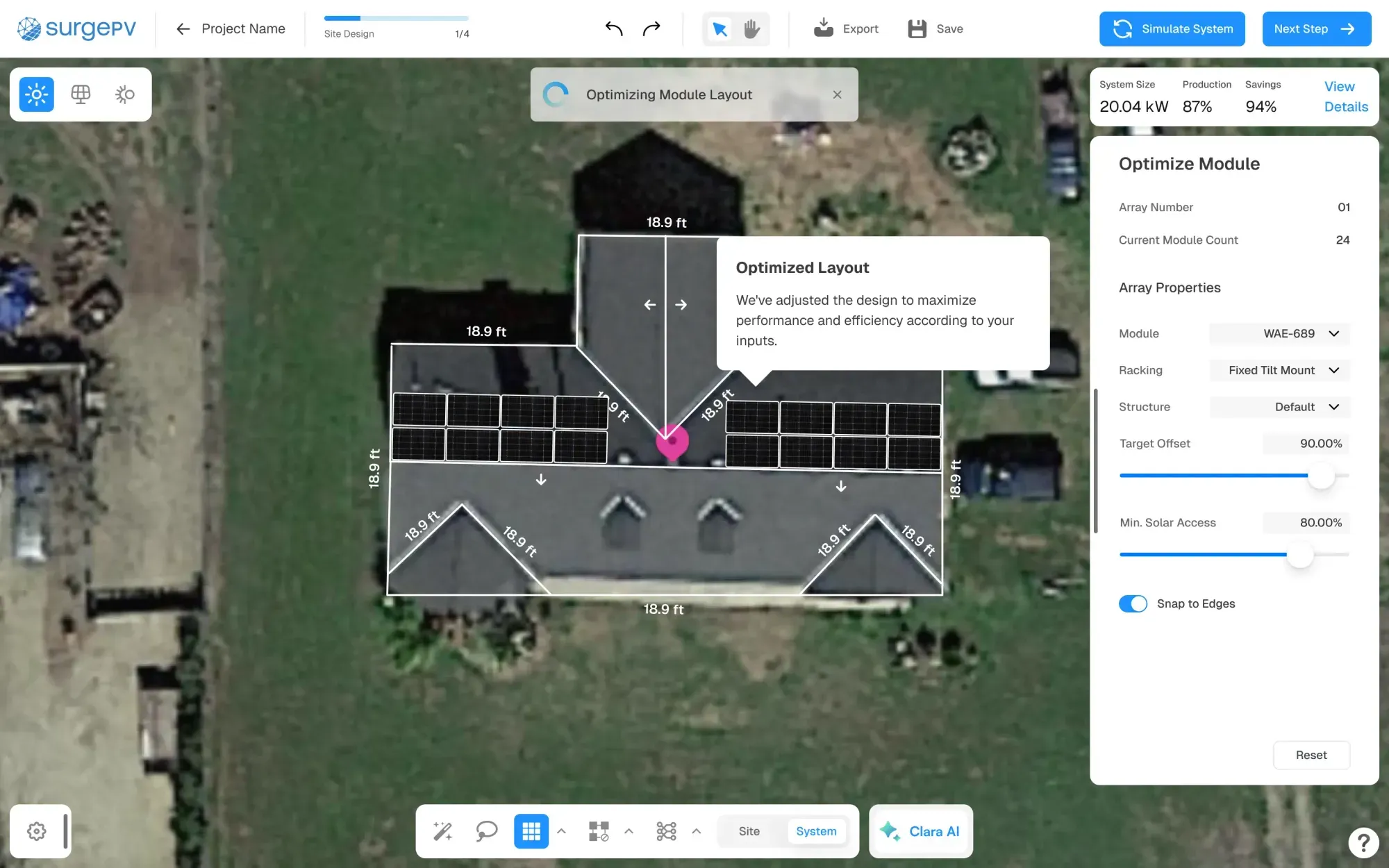
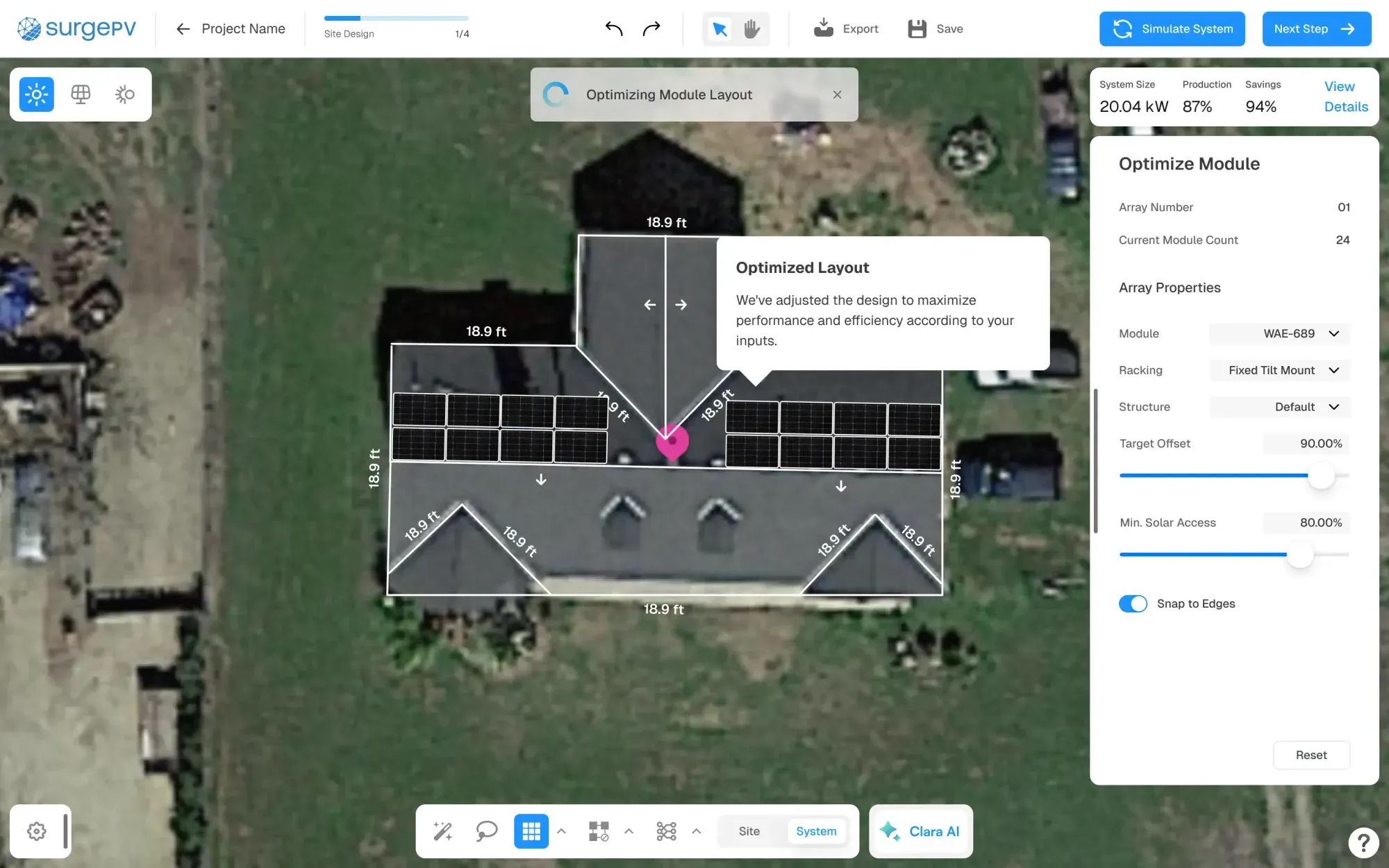
Model Complex Structures and Maximize System Capacity
Review site geometry, obstructions and usable areas in the PV design workflow. Check array layouts against site measurements, structural constraints, equipment requirements and applicable setbacks before engineering approval.
Multi-Structure Support
Design across flat roofs, pitched structures, and ground-mount arrays - all in one project.
AI Roof Detection
Model roof geometry from imagery and check dimensions, obstructions and usable areas against site information.
Optimal Module Placement
Auto-fill algorithms maximize panel count while respecting setbacks, fire codes, and structural constraints.
Analyze Shading, Irradiance, and Energy Yield With Precision
Run comprehensive shade studies, irradiance maps, and sun path simulations to assess system performance. Precise energy yield forecasts give clients the data-driven confidence to make investment decisions faster.
Hour-by-Hour Shade Studies
Simulate shading throughout the year to identify underperforming areas and optimize panel placement.
Irradiance & Sun Path Maps
Visualize solar irradiance on every surface and plan tilt angles for maximum energy capture.
Energy-Yield Reports for Review
Review energy and financial assumptions against stakeholder requirements. Confirm the uncertainty methods and outputs required for the project.
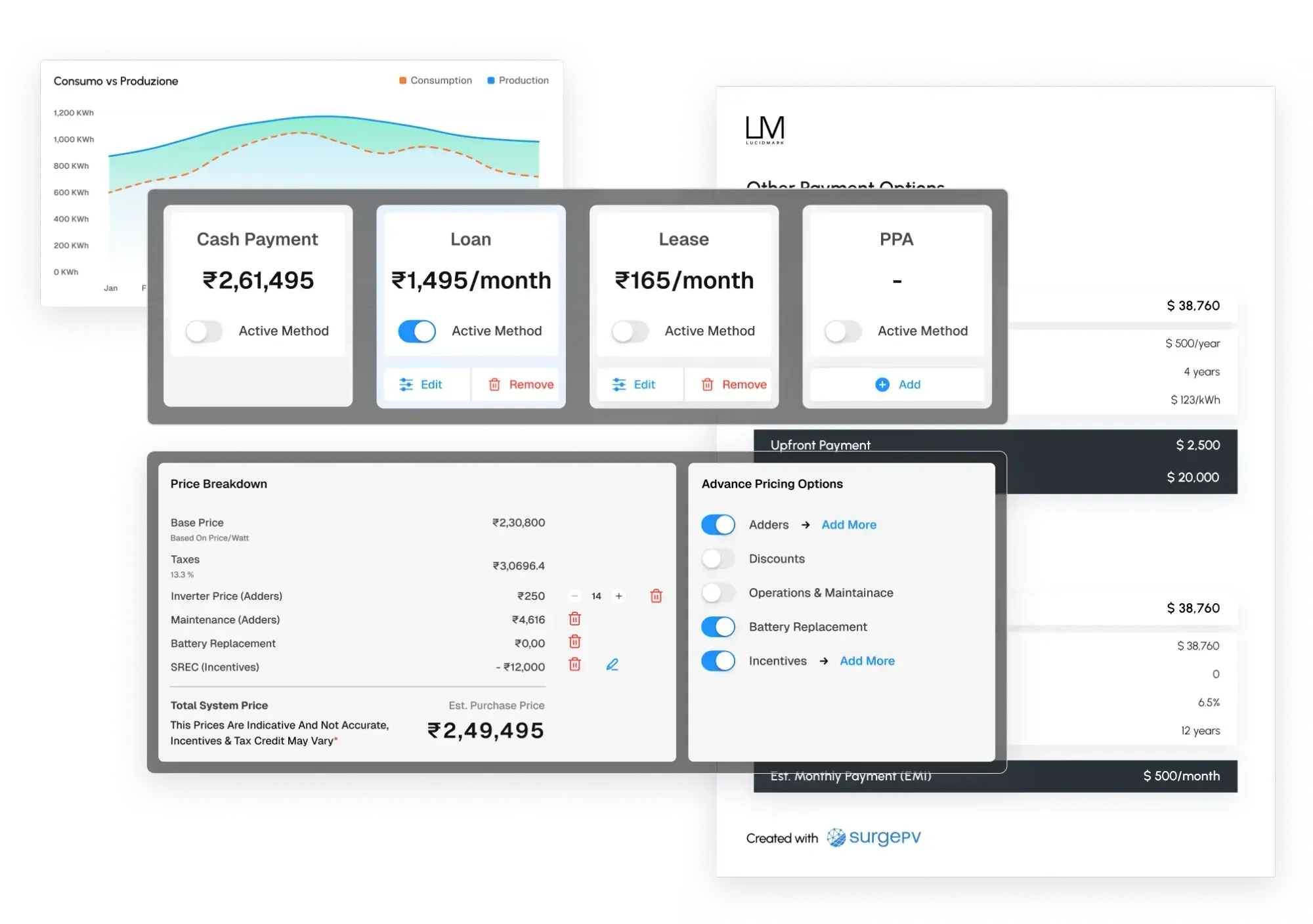
Deliver Financial Models and Proposals That Close Projects
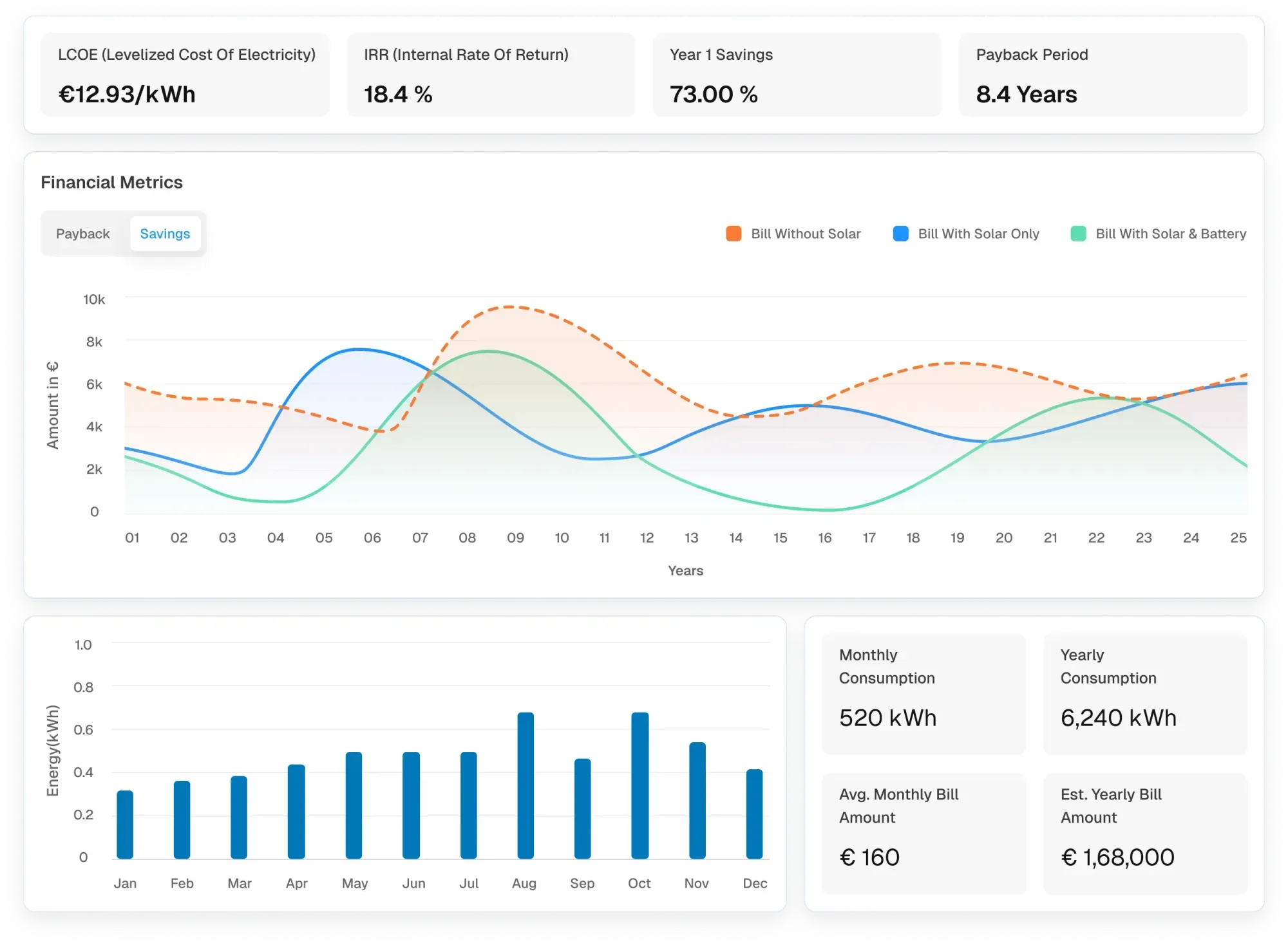
Build investor-grade proposals backed by customizable financial models, ROI forecasts, and payback analysis. SurgePV simplifies complex numbers into clear visuals - accelerating stakeholder approvals and securing commercial deals faster.
IRR & ROI
Auto-calculated returns for investor confidence
Payback
Clear payback timelines with tariff modeling
C&I Financing
PPA, lease, and loan comparison models
Branded
White-label proposals with your company identity
Every Design Meets Code. Every Time.
Review the selected regional rules and project assumptions alongside the design. Confirm code edition, local requirements and required approvals with the responsible engineer and authority.
NEC Compliance
IEC Standards
Fire Setbacks
Building Codes
Permit Review
Applicable Standards
How SurgePV Streamlines Commercial Projects
Five steps from site assessment to signed proposal - all in one cloud platform.
Site Assessment
Import satellite imagery and assess the site remotely with high-res data.
Roof Modeling
Review modeled roof planes, dimensions and obstructions for the commercial site.
Panel Placement
Optimize module layout for maximum capacity with automated fill algorithms.
Energy Analysis
Review shade, weather and loss assumptions in the energy estimate.
Proposal Creation
Generate investor-grade proposals with financials, 3D visuals, and BOM.
Evidence-first evaluation
What Solar Professionals Say
SurgePV does not publish customer names, quotations, or performance outcomes without retained consent and substantiation. Use a representative project during a guided demonstration and validate workflow, outputs, assumptions, and fit against your own requirements.
What is commercial solar design software?
Commercial solar software helps EPCs coordinate site layouts, equipment, electrical documentation, production estimates and project proposals. Evaluate the system size, site types, required exports and review process supported for your representative project.
How do EPCs design commercial solar systems?
Start with verified site geometry, then review module placement, shading assumptions and equipment limits. Carry reviewed production and cost inputs into the commercial proposal. The responsible engineer checks local requirements; investors determine the evidence needed for their decision.
What makes a solar proposal bankable for investors?
Ask the investor which energy assessments, uncertainty methods, loss budgets, financial assumptions and independent reviews are required. Keep those inputs with the proposal; a software-generated document does not by itself establish acceptance.
Project Evaluation Questions
What should an EPC evaluate on a representative project?
Check site and equipment scope, multiple-array and inverter requirements, electrical outputs, modeled losses, financial assumptions and required export formats. Document the handoff to engineering and the customer.
Does the software guarantee code compliance?
No. Verify applicable jurisdiction, code edition, equipment limitations and project-specific requirements with the responsible engineer and authority. Software output supports that review.
Will a lender accept the energy report?
Acceptance is determined by the lender and its due-diligence process. Confirm required methods, uncertainty analysis, source data and independent review before relying on a report.
How does commercial evaluation differ from residential?
Commercial projects may need multiple meters or arrays, different consumption and tariff structures, additional stakeholder reviews and more detailed deliverables. Confirm these requirements for the actual project.
Design More. Sell More. Build More.
See how SurgePV connects solar design, simulation, financial analysis, and proposals in one workflow.
