


Albanian rooftop work needs a licensed designer. The distribution operator asks for datasheets, a technical report and a project approved by licensed persons. A design tool only helps you prepare them. No vendor on this list names Albania on the pages we read, so pick by project size.
PVGIS gives a free yield estimate for sizing. A yield estimate shows how much energy a system should produce. OpenSolar’s core app is free. It generates a single line diagram (SLD), a simple drawing of how the system is wired. API Access and connectors are charged from 16 April 2026. PVcase Ground Mount lists single line diagram export, cable sizing and bill of materials (BOM, a parts list) exports for ground-mounted sites. PVsyst lists P50 to P90 yield evidence (P90 is a yield expected to be met or exceeded in 90% of years; P50: 50%). SurgePV lists roof modeling, bill of materials and proposals in one product, priced per user.
This is a desk comparison of what each vendor publishes, checked October 2026. We have not run side-by-side tests. Local rules below come from the Energy Regulatory Authority (ERE) and Albania’s Law no. 24/2023. Tool facts come from each vendor’s own site.
Criteria used: diagram output, net invoicing or tariff-tier modelling, cable sizing and BOM export, published price currency, yield evidence. As the law defines it, net invoicing is the distribution operator’s monthly invoice to a self-generator. It covers the difference between the electricity used and the electricity sent to the grid in that invoicing period.
Want to see SurgePV on your own project?
Book a guided demo and bring a real site. We walk through design, yield, finance and the proposal in one platform.
Book a Free DemoChecking cost first? See the SurgePV pricing page.
Best-For Picks for Albania
- A free yield estimate to size a prosumer system: PVGIS. The European Commission’s Joint Research Centre offers it with no registration. Its satellite data cover Europe, Africa and most of Asia. It is a yield calculator, not a design or drawing tool. A prosumer is a customer who also generates power.
- Free core app with a generated diagram: OpenSolar. Its free page says the core app is free for solar professionals. API Access and connectors are charged from 16 April 2026. It generates single line diagrams. Neither of its diagram pages lists Albania, so check the output against what the operator asks for.
- Ground-mounted layouts with electrical outputs: PVcase Ground Mount. Its plan table lists single line diagram export, cable sizing and voltage drop, and bill of materials exports. The price is on request.
- Yield evidence for a larger project: PVsyst. Its documentation describes P50 to P90 evaluations. It does not produce quotations. Its single line diagram editor is described as work in progress.
- Roof model to bill of materials and proposal in one product, priced per user: SurgePV. It lists roof modeling, shading, yield, financial modeling, electrical workflow support, bill of materials and proposals. It is priced in US dollars. Ask in a demo how it handles Albania’s two-tier household tariff. Its published scope does not say.
Comparison Table
Listed alphabetically. This is not a ranking; pick by the situation above. Prices checked October 2026 on each vendor’s own page.
| Tool | Best for | Price | Free or paid | Decisive scope fact |
|---|---|---|---|---|
| OpenSolar | Free core app, rooftop design | Core app free; API Access and connectors charged from 16 April 2026 | Free core app, paid API and connectors | Diagram templates listed for other countries, not Albania |
| PVcase Ground Mount | Ground-mount layout and electrical outputs | Not published (request pricing) | Paid | Lists SLD export, cable sizing, BOM exports |
| PVGIS | Free yield estimate | Free, no registration | Free | Yield calculator, not a design tool |
| PVsyst | Yield evidence | CHF 700 per year (Professional) | Paid | Documents P50 to P90 evaluations; Windows only |
| SurgePV | Roof model to BOM and proposal, per user | $1,899 per user per year (1 user); no lek price stated | Paid, guided demo | BOM and proposal generation in scope; Albanian tariff tiers not stated |
Albania Criteria Matrix
Each cell says Documented, Partial or Not stated. It is based on the vendor pages we read in October 2026 and list under Sources and Dates. Documented means the page states it for this task. Partial means the page lists a related feature but not the Albanian item. Not stated means we did not find it on those pages. There are no scores or weights.
| Tool | Diagram output | Net invoicing or tariff tiers | Cable sizing and BOM export | Price currency | Yield evidence |
|---|---|---|---|---|---|
| OpenSolar | Partial (generator; Albania not a listed region) | Partial (custom tariffs: flat, time-of-use, tiered, demand charges; Albania, net invoicing not named) | Partial (Auto BOM lists mounting and balance of system; a cable schedule sized against voltage drop is documented only for the India SLD template) | Documented (core app free) | Not stated |
| PVcase Ground Mount | Documented (SLD export) | Not stated | Documented (cable sizing and voltage drop; BOM exports) | Not stated (request pricing) | Partial (QuickYield; exports to PVsyst and PVcase Yield) |
| PVGIS | Not stated (not a design tool) | Not stated | Not stated | Documented (free) | Partial (PV generation estimates; no P50 to P90 stated) |
| PVsyst | Partial (single line diagram editor, “still work in progress”, grid-connected systems only) | Partial (feed-in tariff, self-consumption documented; net invoicing, Albanian tiers not named) | Not stated | Documented (CHF) | Documented |
| SurgePV | Not stated (electrical workflow support listed) | Partial (financial modeling listed) | Partial (bill-of-materials output listed; cable sizing not stated) | Documented (USD) | Not stated (energy-yield modeling listed) |
Two things stand out. No vendor page we read names Albania or net invoicing. OpenSolar lists custom tiered tariffs. PVsyst lists feed-in and self-consumption tariffs. Ask each vendor how it models a tiered household tariff. Also, only PVcase Ground Mount lists cable sizing, diagram export and bill of materials together. It is built for ground-mounted sites, not for prosumer rooftops (customers who also generate power).
Tool Entries
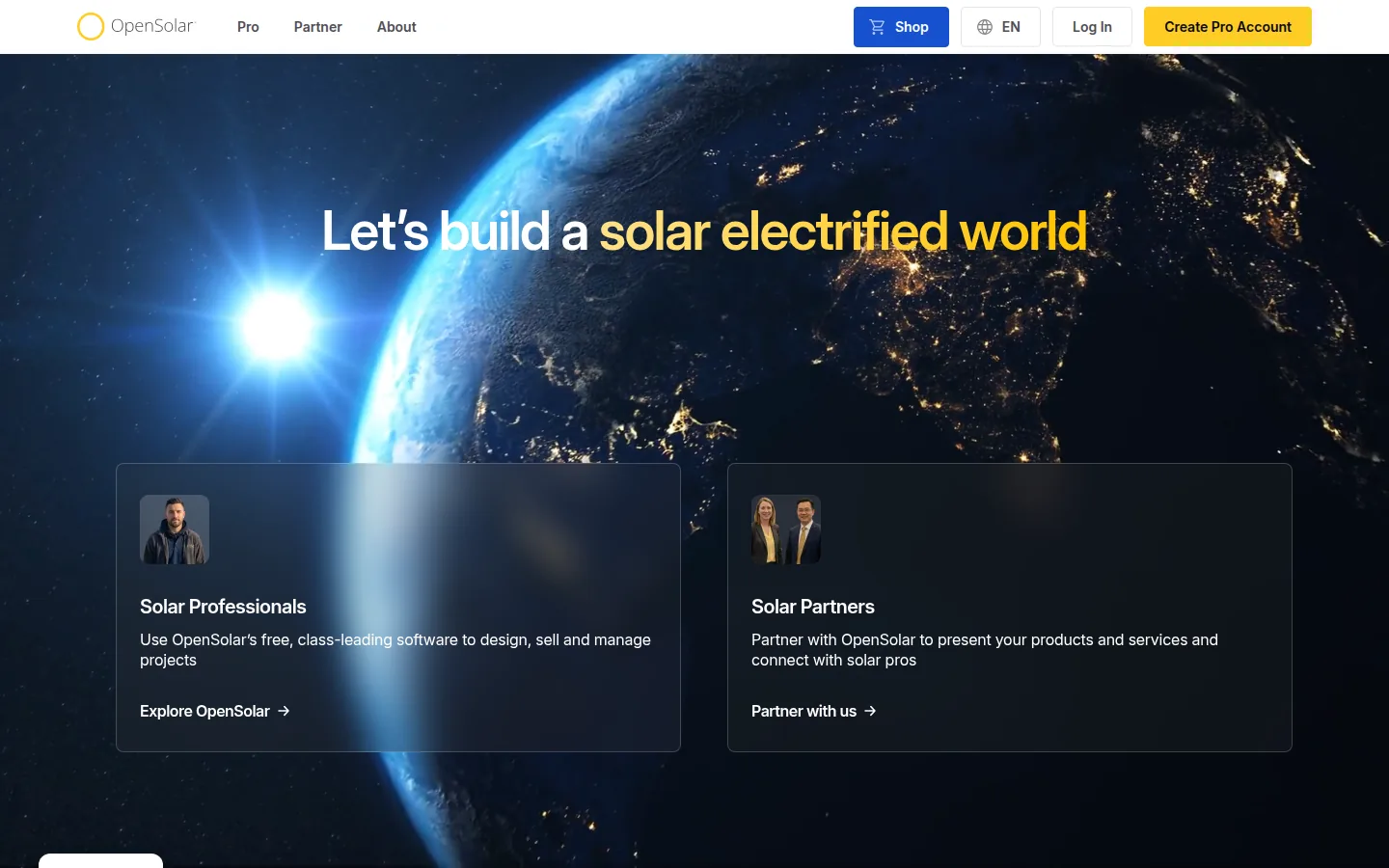
OpenSolar
Best for: small installers who want a design tool with a free core app, proposals and a generated single line diagram. A licensed designer should review the result before it goes to the operator.
Not the right choice if: you need a diagram template that lists Albania. Neither OpenSolar page we read does. You may also need documented P50 to P90 yield evidence, or ground-mount electrical outputs such as cable sizing. Its general SLD article does not state cable sizing. A cable schedule sized against voltage drop is described only for the India template.
What the vendor documents: its single line diagram page lists “Region-specific templates for AU, US, UK, DE, IT, ES”. Its help article lists a longer set (AU, NZ, US, CA, UK, FR, DE, IT, ES and IN) without Albania. Auto BOM builds a hardware list from the design, including mounting and balance of system components. The Why OpenSolar page says the community spans 185+ countries and 13+ languages.
Price (checked October 2026): the core app is free of charge for solar professionals, per the vendor. From 16 April 2026 the vendor charges for two things. API Access, which lets other software connect to OpenSolar, costs a per-project fee. The per-project API fee is on OpenSolar’s API page. Supported connectors cost a monthly fee per organization. The 16 February 2026 post says accounting connectors are billed as a monthly fee per organization. Optional paid Enterprise Services are Support at US$500 per month and Customize at US$1,350 per month. Enterprise is at a custom price (Enterprise Services page). Premium imagery is pay per image, and the app shows the price.
Limitations: the pages we read state no Albanian tariff, form or document output.
Vendor link: opensolar.com.
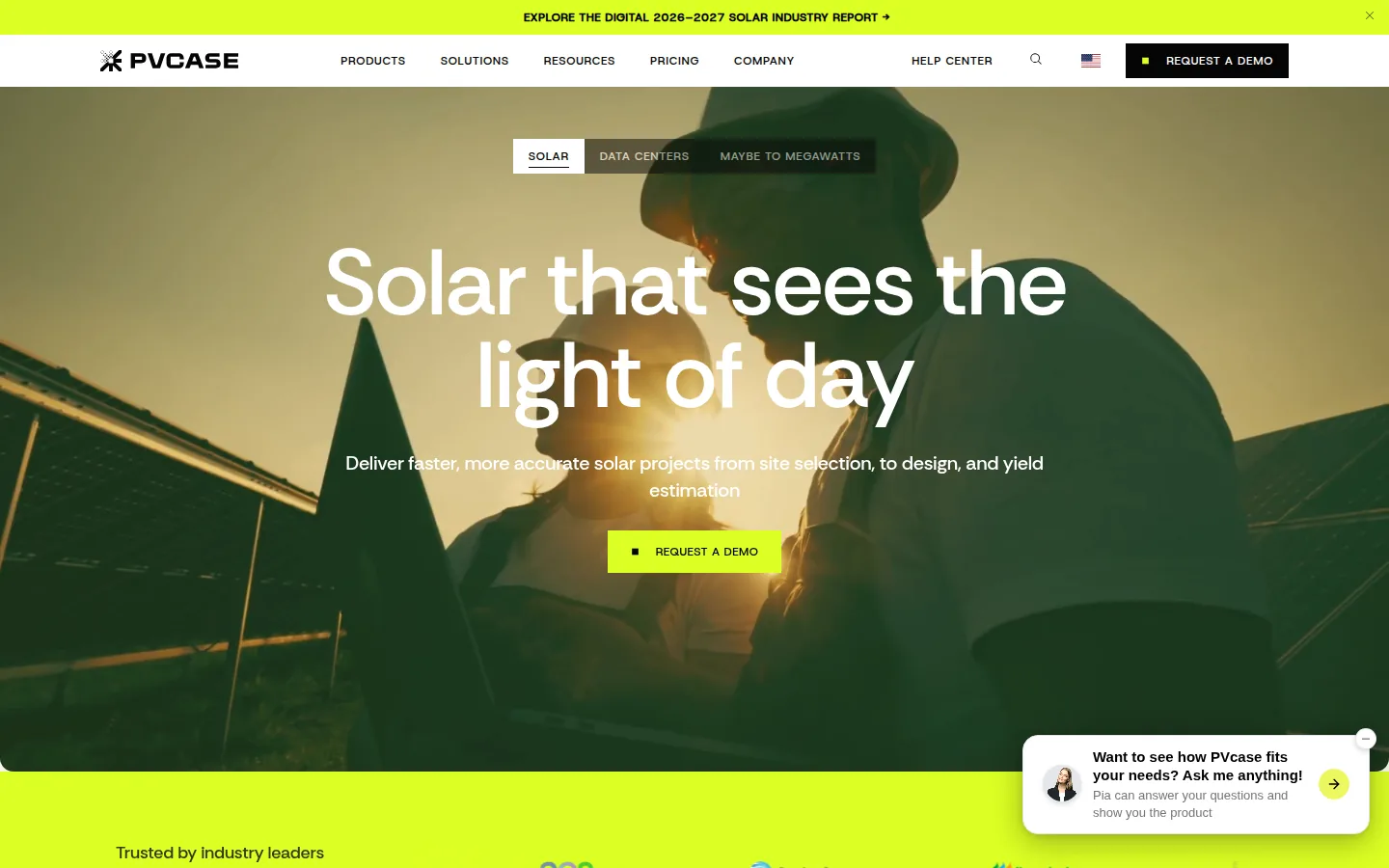
PVcase Ground Mount
Best for: developers and EPC firms (engineering, procurement and construction companies) that lay out ground-mounted plants. They want electrical outputs from the layout, for projects above the prosumer band.
Not the right choice if: you design residential or small commercial rooftops, because this plan is described as ground mount. It is also not right if you need a published price. The page says “Request pricing”.
What the vendor documents: on its pricing plans page, frame creation and optimisation, terrain and slope analysis, grading, piling analysis and stringing. It also lists preliminary and detailed electrical design, single line diagram export, and cable sizing and voltage drop. The list goes on with shading and irradiance analysis and AC and DC coupled storage. It also has a QuickYield estimate, bill of materials exports, and export to PVcase Yield and PVsyst.
Price (checked October 2026): not published. The page offers “Request pricing” and “Talk to sales”.
Limitations: the page names no country-specific rule check and no Albanian grid code.
Vendor link: pvcase.com.
PVGIS
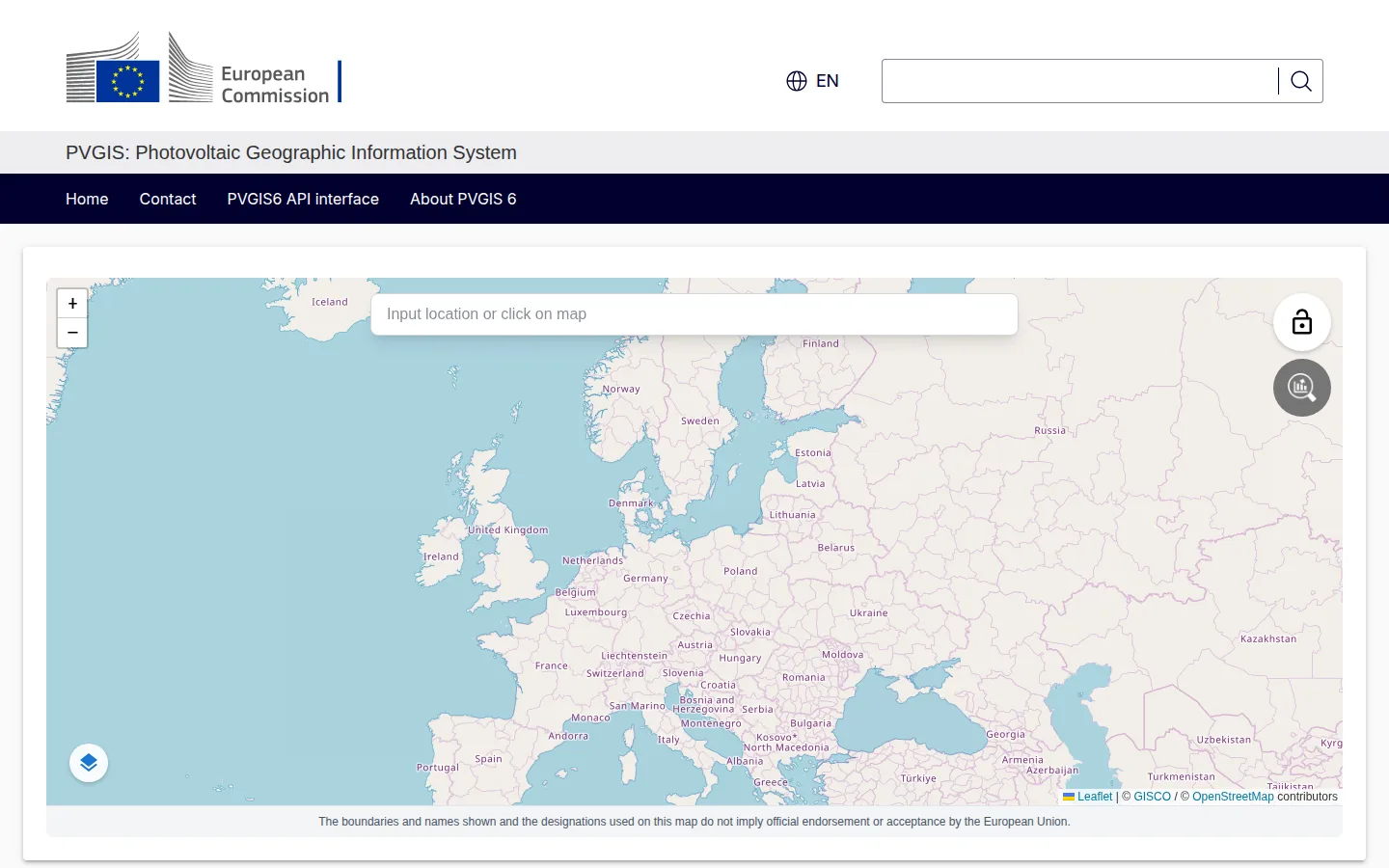
Best for: a free first yield estimate when you size a prosumer system, from a European Commission source.
Not the right choice if: you need a design, layout, drawing or proposal tool. It is also not right if you need a P50 to P90 report for a lender. None is stated on the pages we read.
What the vendor documents: the Joint Research Centre page describes “free and open access to photovoltaic electricity generation potential”. It also lists no registration and an API (a way to link to other software). It is available in English, French, Italian, Spanish and German (PVGIS 5). The data sources page says the satellite data come from METEOSAT images covering Europe, Africa and most of Asia. It also says that ERA-5 reanalysis data have global coverage.
Price (checked October 2026): free.
Limitations: it is a calculator, so it produces no diagram, bill of materials or proposal. The pages we read do not name Albania.
Vendor link: PVGIS at the European Commission.
PVsyst
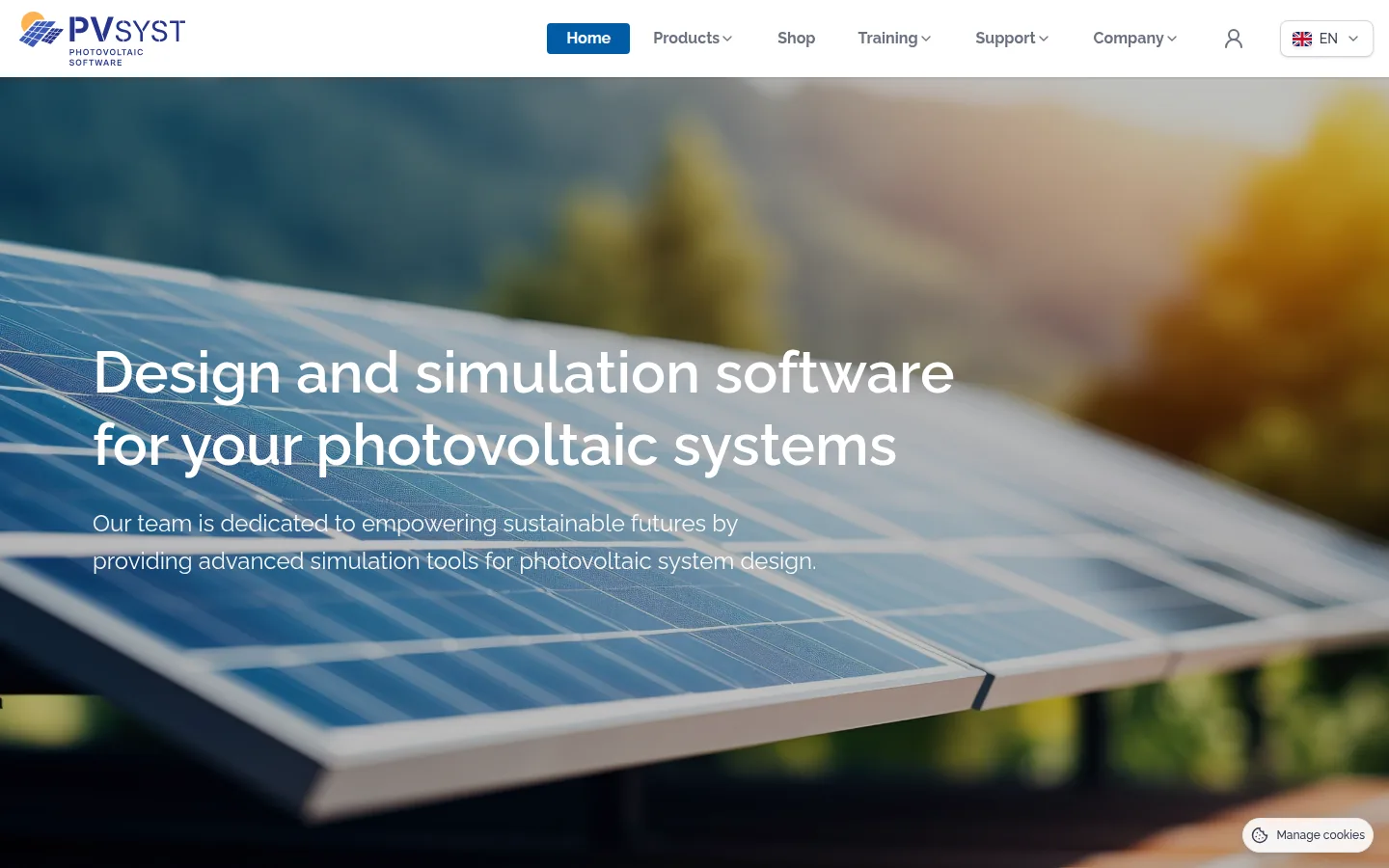
Best for: yield evidence on plants above the 500 kW prosumer ceiling. It also suits any project where a lender, investor or counterparty wants a simulation report.
Not the right choice if: you need quotations and proposals from the same tool, because the pages we read describe no proposal output. It is also not right if you work on a Mac or in a browser. The requirements page says it runs only under Windows.
What the vendor documents: a P50 to P90 evaluation covering weather variability and simulation uncertainties. The languages page lists no Albanian translation. Its single line diagram page says the feature is “still work in progress” and covers grid-connected systems only. The pages we read describe no proposal output. Its feed-in tariff and self-consumption page covers a fixed feed-in tariff (a set price paid for power sent to the grid) over a contract period. It also covers annual variation and hourly feed-in. A self-consumption economy with a consumption tariff and an overproduction tariff is covered too.
Price (checked October 2026): CHF 700 per year for PVsyst 8 Professional. CHF means Swiss francs. Grouped orders get discounts of 5% for 2 to 4 licences, 15% for 5 to 9 and 20% for 10 or more. No lek price is published.
Limitations: the vendor pages we read do not mention Albanian lenders, tariffs or auctions.
Vendor link: pvsyst.com.
SurgePV
SurgePV is our product.
Best for: teams that want roof modeling, shading, yield, financial modeling, bill of materials and proposals in one product, priced per user. They should confirm Albanian outputs in a demo.
Not the right choice if: you want a self-serve trial (SurgePV offers a guided demo). It is also not right if you need a lek price in writing before talking to sales. Ask for a quote. For visitors outside India the pricing page lists US dollars. Finally, it is not right if you design ground-mounted plants with terrain and cable-sizing outputs (PVcase Ground Mount lists them). Outputs support design and documentation but do not replace approval by the responsible engineer, authority, lender or utility. SurgePV’s published product scope does not list a CRM. It is not a monitoring or ERP (business planning) product.
What the vendor documents: 3D roof modeling, array layout, shading analysis, energy-yield modeling, financial modeling, electrical workflow support, bill-of-materials output and proposal generation. See solar design software for the product page.
Price (checked October 2026): $1,899 per user per year for 1 user, $1,499 per user for 3 seats, $1,299 per user for 5 seats, in US dollars.
Limitations: results depend on source data, assumptions and equipment models. The pricing page and published scope do not state Albanian tariff tiers, net invoicing, a diagram format for the operator or P50 to P90 outputs.
Vendor link: surgepv.com.
Albanian Rules That Shape the Choice
Prosumer rules in Law no. 24/2023. The ERE publishes the law in English (ERE, Law no. 24/2023). Article 20 sets a maximum capacity of 500 kW for renewable self-generators. They have the right to generate, consume, store and sell their excess. Their compensation scheme is based on net invoicing. A Council of Ministers decision defines the scheme, the application procedure and its deadlines. We did not find that decision’s text. check the latest billing basis with the distribution operator before you promise a customer a payback. Article 30 says Article 20 applies from 1 January 2024. Until then, customers up to 500 kW were on a net metering scheme with an annual balance. Article 18 connects self-consumer installations of 10.8 kW or less after a notification to the distribution operator. The same applies to equivalent non-three-phase connections.
The connection file. ERE’s regulation on new connections (Decision 166 of 2016, amended through Decision 145 of 19 July 2024) sets documents for self-producers in three bands. The bands use kWp, which is kilowatts peak. For 0 to 10 kWp the list includes a technical report and product datasheets. It also includes a test certificate signed by licensed designers and contractors, and a metering proposal. For 11 to 50 kWp it adds an approved project from licensed persons and the main inverter data. For 51 to 500 kWp it also lists permission from the municipality. A design tool can produce the layout, datasheet list and scheme. The approvals come from licensed persons. Fees for self-producers up to 500 kWp include a study tariff. It is 1,000 ALL for households and 5,000 ALL for non-household low-voltage customers. ALL is the Albanian lek. The fees also include a service tariff made of 1,500 ALL for grid update and 1,000 ALL for administration plus a meter test. The regulation sets 60 working days to install a new connection.
Tariffs. ERE decision 322 of 15 December 2025 extends decision 10 of 8 January 2025 to 31 December 2026 (decision 322, decision 10). Households pay 8.5 lek per kWh (kilowatt-hour) up to 700 kWh a month. They pay 9.5 lek on every kWh in a month above 700. The general non-household row for 0.4 kV connections lists 14 lek per kWh, or 16.1 at peak hours. The table also has separate rows for bakeries and places of worship. The tiers create a step. 700 kWh costs 700 × 8.5 = 5,950 lek. 701 kWh costs 701 × 9.5 = 6,659.50 lek. That is a difference of 709.50 lek for one extra kWh. A proposal tool that uses a flat price will misstate savings for a household near 700 kWh. The tariff table we read does not mention VAT (value-added tax), so check before quoting. ERE also says it may pass later changes in distribution tariffs into these prices.
Larger plants. Law no. 24/2023 says support for priority producers is granted through a competitive process (Article 10). Contracts for support generally last up to 15 years (Article 14).
Regulator pointer. The Energy Regulatory Authority publishes the law, the connection regulation and the tariff decisions.
What to Ask a Vendor Before Buying
Ask each vendor for one sample project. Look for four things. First, a household tariff with a 700 kWh step. Second, a way to enter net invoicing terms once you have confirmed them with the operator. Third, a datasheet list and diagram you can hand to a licensed designer. Fourth, a price in the currency you will be invoiced in. Where a vendor does not publish a feature on the pages we read, the matrix says so. A demo or trial is the place to confirm it.
How We Ordered These Tools
We did not rank these tools. They are listed alphabetically. The best-for picks come from the matrix above.
- Diagram output: the operator’s file includes a technical report and scheme prepared by licensed persons. A generated diagram speeds that work. We did not assess whether any diagram meets the operator’s format.
- Net invoicing or tariff tiers: Albania’s household price steps at 700 kWh a month. Exports are compensated by net invoicing. We did not assess whether any calculation is correct.
- Cable sizing and BOM export: electrical outputs and a hardware list reduce re-entry on larger sites. We did not assess output quality.
- Price currency: the currency shows what an Albanian buyer will pay. No vendor on this list prices in lek. We did not assess discounts or negotiated quotes.
- Yield evidence: larger projects need a yield report a lender or counterparty will read. We did not assess acceptance by any Albanian lender.
Sources and Dates
Vendor pages were read in October 2026. OpenSolar (core app page, pricing post, Enterprise Services, diagrams, Auto BOM). PVcase (ground mount plans). PVGIS (overview). PVsyst (shop, languages, feed-in tariff). SurgePV (pricing). Albanian sources are ERE’s English text of Law no. 24/2023, its regulation on new connections and its decisions 10 of 2025 and 322 of 2025. We read all of them in October 2026. The two decisions are in Albanian. The figures quoted are from their tariff tables. The OpenSolar help centre returns 403 to curl, so we read it in a browser.
See SurgePV on your own project
Book a guided demo and ask for the Albanian outputs you need.
Book a Free DemoGo Deeper on a Category
- Solar software in Albania, all categories
- Proposal software for Albanian installers
- Solar design software in North Macedonia and Greece, the nearest country lists
- Best solar design software, all markets
Frequently Asked Questions
What is the best solar design software for Albanian projects?
It depends on the project size. From what the vendors publish, PVGIS is a free yield estimator from the European Commission. OpenSolar’s core app is free. It generates a single line diagram (SLD), a simple drawing of how the system is wired. API Access and connectors are charged from 16 April 2026. PVcase Ground Mount lists single line diagram export, cable sizing and bill of materials exports for ground-mounted sites. PVsyst lists P50 to P90 yield evidence (P90 is a yield expected to be met or exceeded in 90% of years; P50: 50%). SurgePV lists roof modeling, bill of materials and proposals in one product, priced per user in US dollars. No vendor page we read names Albania.
How much does electricity cost per kWh in Albania?
ERE decision 322 of 15 December 2025 extends its decision 10 of 2025 to 31 December 2026. For households the price is 8.5 lek per kWh up to 700 kWh a month. It is 9.5 lek per kWh on every kWh when monthly use is above 700. The general non-household row for 0.4 kV connections lists 14 lek per kWh. ERE says it may pass later changes in distribution tariffs into these prices.
How large a rooftop system can an Albanian customer install?
Law no. 24/2023 sets a maximum of 500 kW for renewable self-generators. They may generate, consume, store and sell their excess. Self-consumer installations of 10.8 kW or less connect to the distribution grid after a notification to the operator. So do equivalent non-three-phase connections. The compensation scheme is net invoicing, with details set by a Council of Ministers decision.
What documents does the distribution operator ask for from a solar self-producer?
ERE’s regulation on new connections lists documents by size band: 0 to 10 kWp, 11 to 50 kWp and 51 to 500 kWp. All three ask for a technical report and equipment datasheets. They also ask for a test certificate signed by licensed designers and contractors. The two larger bands add a project approved by licensed persons. The largest adds municipal permission.
Is there free solar software for Albania?
PVGIS is a free web tool from the European Commission. It needs no registration and estimates PV electricity generation. OpenSolar’s core app is free of charge for solar professionals. The vendor charges for API Access and supported connectors from 16 April 2026. Neither names Albania. Neither replaces the project approval that ERE’s regulation requires from licensed persons.
Which software suits larger ground-mounted projects in Albania?
Law no. 24/2023 grants support to priority producers through a competitive process. Support contracts are generally up to 15 years. PVcase Ground Mount lists terrain, cable sizing, single line diagram and bill of materials outputs. PVsyst lists P50 to P90 evaluations. Neither publishes an Albanian rule check. PVcase does not publish its price.
