


A Vietnamese solar quote has to show how much output the customer may sell, and that figure moved in 2026. EVN’s page on Decree 243/2026/ND-CP says surplus sold must not exceed 50% of inverter output, up from 20%. None of the vendor pages we read gives a Vietnam tariff or export cap rule. OpenSolar’s core app is free, Aurora Solar lists design, financing integrations and proposal tracking, and SurgePV lists roof modeling, bill of materials and proposals in one product priced per user in US dollars.
This page compares what four vendors publish, with pages checked in November 2026 and no hands-on trials. SurgePV publishes this page and is a vendor on this list, one of 4 tools. Vendor facts come from each vendor’s own site, and prices may change. Solargraf, in an earlier version, is out because its site returned HTTP 403 (access denied) to automated reads.
Order is alphabetical. Criteria: design link, price and stated scope. See How We Ordered These Tools.
Want to see SurgePV on your own project?
Book a guided demo and bring a real site. We walk through design, yield, finance and the proposal in one platform.
Book a Free DemoChecking cost first? See the SurgePV pricing page.
Best-For Picks for Vietnam
-
A rooftop quote that shows self-use and exports separately: Aurora Solar. Its pricing page lists tablet-friendly proposals, integrated financing and proposal activity tracking. Contract Manager and e-signature tools are on Enterprise. Its help article on editing rates is the closest listed match for an export cap you set yourself.
-
A commercial quote with storage, where discharged battery energy can count as surplus: Energy Toolbase. ETB Developer lists a database of more than 120,000 utility rates and payment option comparison. Price is given on a call, and its page does not name Vietnam.
-
A free core app to build the first quotes at 50% and 20% caps: OpenSolar. The core app is free with proposals, checkout and e-signature. API Access and connectors are charged from 16 April 2026.
-
A roof model to quote flow priced per user: SurgePV. It lists 3D roof modeling, shading, yield, financial modeling, bill of materials and proposal generation. Access is a guided demo. Ask how it handles an export limit as a share of generation.
Comparison Table
Listed alphabetically. This is not a ranking; pick by the situation above. Prices checked November 2026 on each vendor’s own page.
| Tool | Best for | Price | Free or paid | Decisive scope fact |
|---|---|---|---|---|
| Aurora Solar | Design and sales proposals, per user | Basic $159 per user per month; $135 per user per month billed annually | Paid | Contract Manager and e-signature tools only on Enterprise |
| Energy Toolbase | Commercial solar and storage proposals | Not published; demo with pricing | Paid, quote on a call | In-app PV panel layout marked not included for ETB Developer |
| OpenSolar | Free core app with proposals | Core app free; API Access and connectors charged from 16 April 2026 | Free core app, paid API and connectors | Proposal formats are for residential workflows |
| SurgePV | Roof model to proposal in one product | $1,899 per user per year (1 user) | Paid, guided demo | Proposal built from the design model; no Vietnam-specific output stated |
What to Check for Vietnam
Build two versions of one Vietnam job in each tool, one with a 50% export cap and one at 20%. See whether the tool can hold an export limit as a share of generation, rather than only a flat export price. Check that a battery line changes the export figure. The kWh price for surplus should come from the customer’s signed agreement and sit on its own line. Check that the vendor’s price is in a currency you will pay. The pages we read do not name Vietnam for any tool.
Tool Entries
Aurora Solar
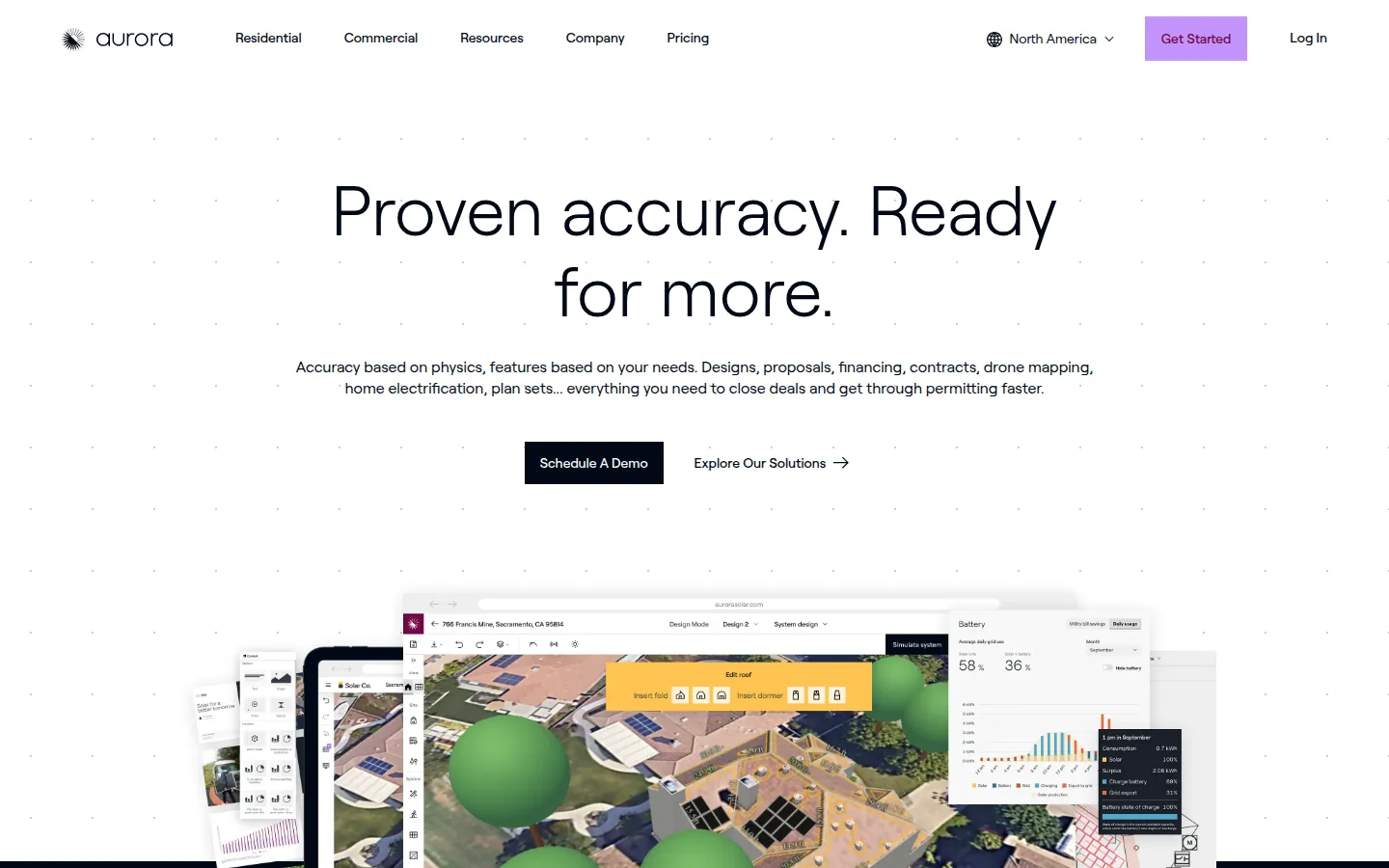
Aurora’s pricing page describes Basic as a plan for residential design and sales.
Best for: Vietnamese residential installers who want a tablet-friendly proposal with integrated financing and the option to edit a rate on each project.
Not the right choice if: you need contract tooling or a fixed export cap built in. Contract Manager, e-signature tools and sales agreement templates are Enterprise items, and the pages we read do not list a cap field. Basic and Premium list one user and 50 projects a month.
What the vendor documents: customizable proposal templates, custom branding, and custom pricing methods (per watt, per component or flat fee). It also lists adders, discounts and incentives, a utility rate database, and web and PDF proposals. Adders are extra items added to the price. It lists proposal activity tracking and integrated and custom financing (GoodLeap, Dividend, Mosaic and more). It also lists financing and energy bill comparisons. Design features on the same page include 3D roof modeling and trees and performance simulation.
Price (checked October 2026): Basic is $159 per user per month billed monthly, or $135 per user per month billed annually ($1,620 billed annually). Premium is $259 per user per month billed monthly, or $220 per user per month billed annually ($2,640 billed annually). Enterprise is custom per project. Source: Aurora pricing.
Limitations: annual Basic and Premium plans carry a one-year commitment, per Aurora’s pricing FAQ. The pages we read name no Vietnam tariff or export cap.
Vendor link: aurorasolar.com.
Energy Toolbase
Energy Toolbase’s ETB Developer covers solar and storage modeling and proposals.
Best for: commercial and storage sales teams in Vietnam whose quotes turn on rates and storage economics, since stored energy can count toward the surplus sold.
Not the right choice if: you need a published price. The pricing page gives pricing on a call and lists hardware and consulting items separately.
What the vendor documents: a simulation engine for solar and storage. It also has a database of more than 120,000 verified utility rates kept by an in-house rates team. It supports VNEM (virtual net energy metering), NEMA (net energy metering aggregation) and other billing structures. It also lists payment option comparison, incentive calculations and cost forecasts. Proposals use branded templates. The vendor lists notifications when a prospect opens a proposal. It also lists analytics on time spent per section, and lead management. It also lists “PV design partnerships with leading design software tools” and “real-time indicative pricing quotes from lenders”. The page’s comparison table marks in-app PV panel layout tools as not included for ETB Developer. Its FAQ says it supports financing structures including cash purchases, power purchase agreements (PPAs), loans and leases. Source: ETB Developer.
Price (checked October 2026): not published for ETB Developer. The pricing page offers a 30-minute demo with pricing for your team size, and lists hardware and consulting items separately.
Limitations: hardware, consulting and implementation packages are priced separately on the pricing page. The pages we read do not say which countries its rate database covers.
Vendor link: energytoolbase.com.

OpenSolar
OpenSolar says its core app stays free, with a partner ecosystem helping fund it (16 February 2026 post).
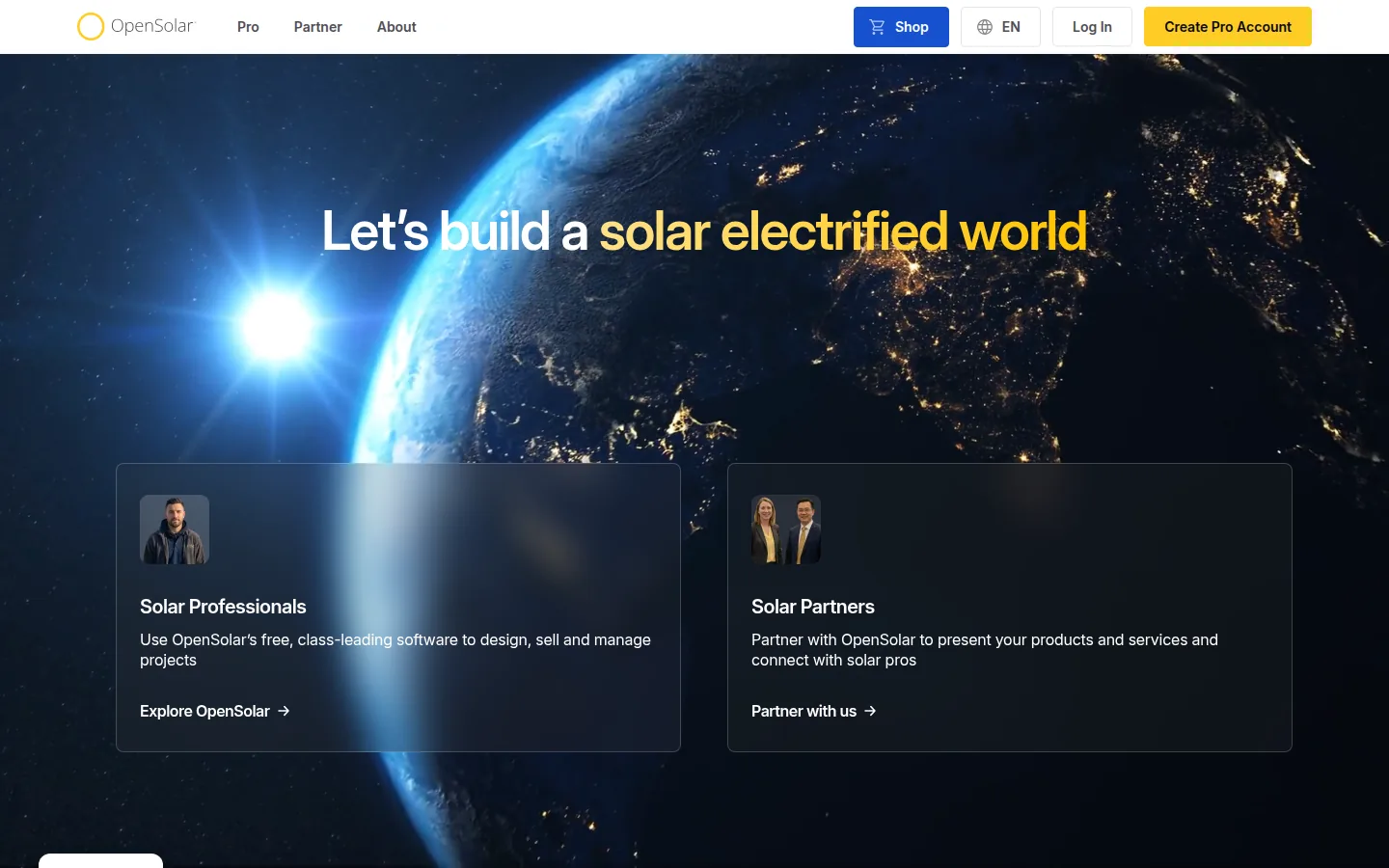
Best for: small Vietnamese installers who want design, a proposal, checkout and e-signature in one free core application.
Not the right choice if: you quote commercial rooftops, because OpenSolar’s proposal FAQ says Swipe, Scroll and Bespoke “are for residential proposal workflows”. If you link outside systems, API Access and connectors are charged from 16 April 2026. The proposal page also says availability is “enabled by region”.
What the vendor documents: the Sales Machine Proposal page lists Swipe (slide-based), Scroll (long-form) and Bespoke proposals. It also lists a Quick Quote path, a fast quote and checkout route for simpler service and non-solar jobs. It lists branding controls and a template library. It lists savings views that compare current and electrified energy costs. It also lists deposits through CashFlow. It also lists financing “where available” and acceptance inside the same flow. A WhatsApp share option and section-view tracking “where available” are listed as well. The e-signature page lists a built-in signing workflow, PandaDoc or DocuSign.
Price (checked October 2026): the core app is free of charge for solar professionals, per the vendor (free page). From 16 April 2026 the vendor charges for API Access, a per-project fee. The per-project API fee is on OpenSolar’s API page. It also charges for supported connectors, a monthly fee per organization. The 16 February 2026 post says accounting connectors are billed as a monthly fee per organization. Bespoke proposals are offered through the optional paid Enterprise Services. Support is US$500 per month. Customize is US$1,350 per month (one exclusive proposal template). Enterprise is custom (“fully bespoke proposal”). Premium imagery is pay per image (price shown in the app).
Limitations: the proposal page says Swipe, Scroll and Bespoke support up to six designs per project where design selection applies. The API page prices API Access and connectors by region, and we did not compare those rates.
Vendor link: opensolar.com
SurgePV
SurgePV is our product.
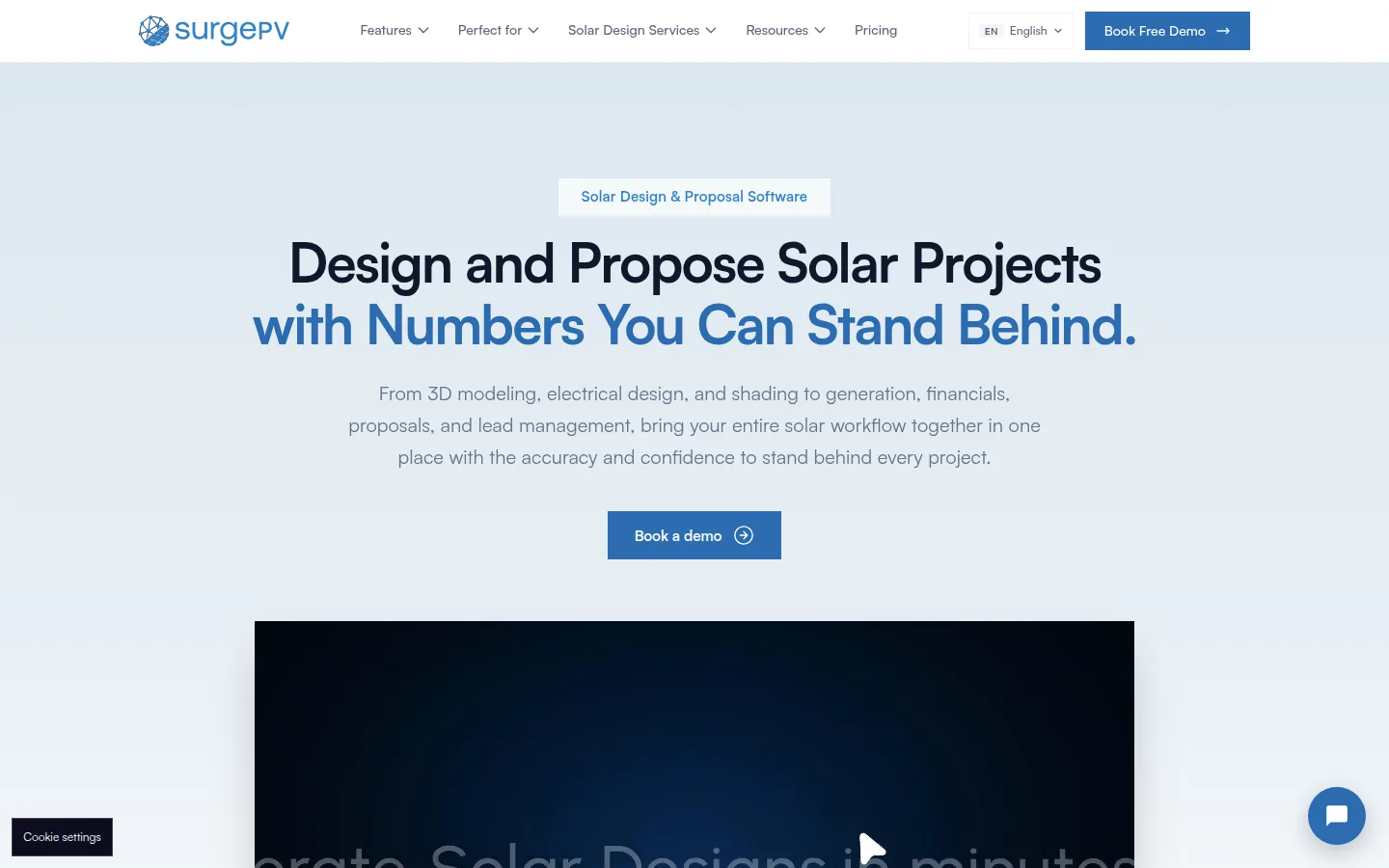
Best for: Vietnamese installers and EPC teams (engineering, procurement and construction) that want the proposal generated from the same 3D roof model, array layout and shading analysis, with yield and financial modeling in one web application.
Not the right choice if: you want a self-serve trial (SurgePV offers a guided demo), or financing, contracts or e-signature inside the proposal. The pricing page lists proposal generation and a generation and financial analysis feature without describing them. The published scope lists no CRM (customer tracking tool). Outputs support design and documentation but do not replace approval by the responsible engineer, authority, lender or utility.
What the vendor documents: 3D roof modeling, solar array layout, shading analysis and energy-yield modeling. It also lists financial modeling, electrical workflow support, bill-of-materials output and proposal generation. The pricing page lists unlimited projects, shadow analysis, generation and financial analysis, and proposal generation under “Everything included”. See the solar proposal software page for the product.
Price (checked November 2026): $1,899 per user per year for 1 user, $1,499 per user for 3 seats, $1,299 per user for 5 seats, in US dollars. Access is a guided demo.
Limitations: results depend on source data, assumptions, equipment models and review. The published scope names no Vietnam export cap, tariff, language or currency, so ask for them in a demo.
Vendor link: surgepv.com. Book a Free Demo.
What Vietnam Allows Customers to Sell
A Vietnamese proposal needs one number above all: how much of the solar output the customer may sell. The cap changed in 2026, so older quotes can be wrong. These facts are as of November 2026.
The cap rose from 20% to 50%. EVN’s page on Decree 243/2026/ND-CP, dated 26 June 2026, amends Article 14 of Decree 58/2025/ND-CP. It says surplus sold must not exceed 50% of the electricity generated at the inverter output under available solar irradiance, and that the previous cap was 20%. A Duane Morris summary of Decree 58 also reports the 20% figure, which is the older rule. A proposal built on the earlier cap understates exports.
More than 50% is possible, with conditions. Until 31 December 2030, the parties may agree to sell more than 50%, but only if the interconnection grid has adequate hosting capacity and the sale supports secure grid operation. In mountainous, border and island areas whose networks are not interconnected to the national grid, there is no sale limit, and payment covers all electricity delivered to the purchaser’s network as measured by the meter.
Stored energy can count. The same page says surplus can include electricity discharged from a storage system charged by the rooftop installation. A battery line in a quote therefore changes the export calculation, not only the self-use share.
What the sources leave out. Neither page states a price per kWh for surplus power, so a proposal should not invent one. Use the rate in the customer’s signed agreement with the purchaser and show the cap and the price on separate lines. EVN’s page also gives no numeric kW thresholds.
How to use this when comparing tools. Build one Vietnam example with a 50% export cap and a second at 20%, and see how each tool handles the difference. A tool that only models a fixed export price with no volume limit cannot show the cap. Ask each vendor, SurgePV included, how it handles an export limit in a demo, and read what each plan includes on the pricing page. For connection and metering rules, see the Vietnam design software list, and for market context the Vietnam solar software list.
How We Ordered These Tools
We did not rank these tools. They are in alphabetical order, and each best-for pick follows from what the vendor publishes.
-
Design link: whether the vendor says the proposal is built from the design. We did not assess output quality.
-
Price: the figure the vendor lists, in its own currency. No page we read lists a dong price, and discounts or negotiated quotes were not assessed.
-
Scope: what each vendor’s pages say the tool covers. Where they say nothing about a Vietnam export cap we do not infer it.
Go Deeper on a Category
- Solar proposal software, all markets
- Solar design software for Vietnam
- Solar software in Vietnam
- SurgePV solar proposal software
Sources and Dates
Vendor pages were read in October and November 2026. Screenshots are public website captures from 29 October 2026. Sources are the vendor pages linked in each entry: pricing, product and help pages. SurgePV facts come from its pricing page. SurgePV publishes this page and is a vendor on the list. We could not read Solargraf’s site, so it is not compared.
The Vietnam surplus-sale facts come from the EVN page on Decree 243/2026/ND-CP and a Duane Morris summary of Decree 58, read in November 2026.
Frequently Asked Questions
What is the best solar proposal software in Vietnam?
It depends on the job. OpenSolar’s core app is free. Aurora Solar lists design, financing integrations and proposal tracking. SurgePV lists roof modeling, bill of materials and proposals in one product. We did not verify Vietnam-specific coverage for any tool, so test each on a real Vietnam project before you buy.
How much does solar proposal software cost in Vietnam?
Vendors price in their own currency, and the pages we read do not give a local-currency price. SurgePV lists $1,899 per user per year for one user. OpenSolar’s core app is free, with charges for API Access and connectors from 16 April 2026. Aurora Basic is $159 per user per month, or $135 per user per month billed annually. Energy Toolbase does not publish a price for ETB Developer.
Is there free solar proposal software for Vietnam?
OpenSolar says its core app is free for solar professionals. The vendor charges for API Access and supported connectors from 16 April 2026. Check regional availability of any free tool for Vietnam.
Can solar proposal software handle Vietnam tariffs and incentives?
The vendor pages we read describe tariff and incentive features in general terms and do not list Vietnam-specific rates or programs. Ask each vendor to model one real Vietnam bill and incentive in a demo or trial.
Does SurgePV publish this list?
Yes. SurgePV publishes this page and is one of the tools on it. The tools are listed alphabetically and are not ranked.
